In-Place Symmetric Difference in Python: Updating Sets with Exclusive Elements using symmetric_difference_update()
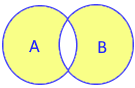
The set.symmetric_difference_update(other) method mutates a set in-place by retaining only elements found in either the calling set or the specified iterable, but not in both, returning None.
In-Place XOR Semantics: This operation executes an in-place Boolean XOR (exclusive OR) over collection members. Common elements shared between both collections are purged, while unique elements from the foreign iterable are inserted directly into the caller set without creating a new set object.
1. Method Syntax & Signature 🔝
The standard CPython signature for set.symmetric_difference_update() is:
set_instance.symmetric_difference_update(other)| Component | Type | Required? | Behavior & Description |
|---|---|---|---|
other |
Iterable[Hashable] |
Yes (exactly one) | A single iterable collection (set, list, tuple, dict keys, or generator) to compare against. Unlike difference_update(), passing multiple positional arguments raises TypeError. |
| Return Value | None |
— | Always returns None. The caller set is mutated directly in-place. |
| Time Complexity | O(L) | — | Where L is the length of other. Each item in other is checked for presence in the calling set, then added or discarded. |
| Space Complexity | O(1) | — | Zero auxiliary set allocations; memory table resized directly in-place. |
2. Basic In-Place XOR Demonstration 🔝
When applying symmetric_difference_update() to two sets, matching elements are deleted from the caller set, and non-matching elements from the foreign set are inserted. The caller's unique elements are preserved:
A = {'a', 'b', 'c'}
B = {'a', 'y', 'z'}

initial_id = id(A)

# In-place symmetric difference
result = A.symmetric_difference_update(B)

print("Mutated Set A:", sorted(A))
print("Unchanged Set B:", sorted(B))
print("Return Value:", result)
print("Memory Address Preserved:", id(A) == initial_id)
Output:
Mutated Set A: ['b', 'c', 'y', 'z']
Unchanged Set B: ['a', 'y', 'z']
Return Value: None
Memory Address Preserved: True'a'was present in bothAandB→ Removed fromA.'b'and'c'were present only inA→ Retained inA.'y'and'z'were present only inB→ Added toA.
3. Heterogeneous Iterables & String Unpacking 🔝
The other parameter can be any valid Python iterable, such as lists, tuples, dictionaries, or character strings.
Example A: Working with a List Iterable
Passing a Python list to symmetric_difference_update() operates seamlessly without explicit set conversion:
A = {'a', 'b', 'c'}
B = ['a', 'x', 'y']

A.symmetric_difference_update(B)
print("Result after list input:", sorted(A))
Output:
Result after list input: ['b', 'c', 'x', 'y']Example B: Working with a String (Character Unpacking Nuance)
Because Python strings are iterables of individual characters, passing a raw string decomposes it into single-character tokens:
A = {'a', 'b', 'c', 'x', 'y'}
B = 'Alex'  # Iterates over 'A', 'l', 'e', 'x'

A.symmetric_difference_update(B)
print("Result after string input:", sorted(A))

# Proper word-level symmetric difference: wrap words inside a collection!
tags = {"python", "flask"}
new_tags = ["flask", "fastapi"]
tags.symmetric_difference_update(new_tags)
print("Word-level result:", sorted(tags))
Output:
Result after string input: ['A', 'a', 'b', 'c', 'e', 'l', 'y']
Word-level result: ['fastapi', 'python']
4. Comparison: symmetric_difference_update vs symmetric_difference vs ^= 🔝
Python provides multiple ways to compute symmetric differences. The following matrix outlines operational differences:
| Feature | set.symmetric_difference_update() |
set.symmetric_difference() |
^= Operator |
^ Operator |
|---|---|---|---|---|
| Mutation Mode | In-place (mutates caller) | Pure (returns new set) | In-place (mutates caller) | Pure (returns new set) |
| Return Value | None |
New set object |
Reference to mutated set | New set object |
| Operand Type | Any iterable (list, tuple, dict, str) | Any iterable | Set instances only | Set instances only |
| Argument Count | Exactly 1 iterable | Exactly 1 iterable | Chained (s ^= a ^= b) |
Chained (s ^ a ^ b) |
| Memory Allocation | O(1) auxiliary space | O(N) new set | O(1) auxiliary space | O(N) new set |
s = {1, 2, 3}
lst = [3, 4]

# 1. Method works with arbitrary iterables (e.g. list):
s.symmetric_difference_update(lst)
print("Method result:", s)  # {1, 2, 4}

# 2. Operator requires set type on both sides:
try:
    s ^= [4, 5]
except TypeError as e:
    print("Operator TypeError:", e)
Output:
Method result: {1, 2, 4}
Operator TypeError: unsupported operand type(s) for ^=: 'set' and 'list'
5. Real-World Engineering Recipes 🔝
Recipe A: State Toggle & Batch Feature Flag Synchronization
Symmetric difference acts as a natural toggle switch. Applying it twice with the same delta returns the set to its original configuration:
active_flags = {"beta_ui", "dark_mode", "telemetry"}
toggle_batch = {"beta_ui", "experimental_ai"}

# First sync: toggles 'beta_ui' OFF and 'experimental_ai' ON
active_flags.symmetric_difference_update(toggle_batch)
print("After 1st toggle:", sorted(active_flags))

# Second sync: reapplying same delta reverses changes completely
active_flags.symmetric_difference_update(toggle_batch)
print("After 2nd toggle (restored):", sorted(active_flags))
Output:
After 1st toggle: ['dark_mode', 'experimental_ai', 'telemetry']
After 2nd toggle (restored): ['beta_ui', 'dark_mode', 'telemetry']
Recipe B: Cache vs. Database Discrepancy Auditing
Detect synchronization drift between active Redis cache keys and persistent database primary keys:
cached_ids = {101, 102, 103, 104}
db_active_ids = [102, 103, 105]

# Clone cache set to isolate unsynchronized keys
sync_delta = cached_ids.copy()
sync_delta.symmetric_difference_update(db_active_ids)

print("Desynchronized IDs:", sorted(sync_delta))
Output:
Desynchronized IDs: [101, 104, 105]6. Common Pitfalls & Developer Traps 🔝
set.update() or set.difference_update(), symmetric_difference_update() accepts exactly one argument:
s = {1, 2}
# BUG: TypeError: symmetric_difference_update() takes exactly one argument (2 given)
try:
    s.symmetric_difference_update({2}, {3})
except TypeError as err:
print("Argument error:", err)None. Reassigning the caller variable erases the set entirely:
my_set = {1, 2}
my_set = my_set.symmetric_difference_update({2, 3})  # my_set is now None!
7. Verification & Self-Checking Test Suite 🔝
Execute this self-verifying test suite to ensure comprehensive coverage across edge cases:
# Test 1: In-place identity & None return
s1 = {1, 2, 3}
ptr = id(s1)
ret = s1.symmetric_difference_update({3, 4})
assert ret is None
assert id(s1) == ptr
assert s1 == {1, 2, 4}

# Test 2: In-place XOR reversibility (toggle rule)
state = {"a", "b"}
delta = {"b", "c"}
state.symmetric_difference_update(delta)
assert state == {"a", "c"}
state.symmetric_difference_update(delta)
assert state == {"a", "b"}

# Test 3: Disjoint collections union cleanly
disjoint_a = {10, 20}
disjoint_a.symmetric_difference_update([30, 40])
assert disjoint_a == {10, 20, 30, 40}

print("All symmetric_difference_update unit assertions passed successfully!")
Output:
All symmetric_difference_update unit assertions passed successfully!8. Interactive Notebook & Practice Exercises 🔝
Practice hands-on drills and memory profiling benchmarks in our companion Jupyter Notebook:
Interactive Companion Jupyter Notebook
Explore interactive code cells, memory benchmarking against set.symmetric_difference(), and real-world database synchronization drills.
9. Related Set Methods & Operations 🔝
set.symmetric_difference()
Pure non-mutating symmetric difference returning a brand-new set instance.
set.difference_update()
In-place subtraction that removes matching elements across multiple iterables.
set.intersection_update()
In-place intersection retaining only common elements found across all collections.
set.update()
In-place union adding all elements from other collections into the caller set.

Subhendu Mohapatra
Author & Instructor at plus2net
I write and maintain practical tutorials on Python, PHP, SQL, JavaScript, HTML, jQuery, and web development at plus2net. The tutorials focus on clear explanations, working examples, and code that readers can test and adapt while learning.


Subscribe to our YouTube Channel here

 Python Video Tutorials