In-Place Set Intersection in Python: Retaining Shared Elements with intersection_update()
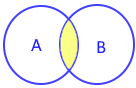
The set.intersection_update(*others) method mutates a set in-place by keeping only elements found in both the target set and every supplied iterable, discarding all non-matching members and returning None.
Memory-Efficient Filtering: Unlike set.intersection() or the binary & operator, which allocate a completely new set object in memory, intersection_update() refactors the existing set structure in place, dramatically reducing memory overhead during multi-step data pruning.
1. Method Syntax & Signature 🔝
The standard CPython signature for set.intersection_update() is defined as:
set_instance.intersection_update(*others)| Component | Type | Required? | Behavior & Description |
|---|---|---|---|
*others |
Iterable[Hashable] |
At least one | One or more iterables whose common members will be retained. Accepts sets, lists, tuples, dict keys, and generators. |
| Return Value | None |
— | Always returns None. The calling set container is mutated directly in-place. |
| Exceptions | TypeError |
— | Raised if any argument is non-iterable (e.g. an integer, float, or boolean). |
2. Basic In-Place Filtering Demonstration 🔝
When calling intersection_update(), Python checks each element of the caller set against the supplied collection. Elements absent from the other collection are removed immediately, while identity (memory address) remains identical:
# Initialize primary and reference sets
primary_skills = {"Python", "SQL", "Docker", "Git"}
required_skills = {"Python", "SQL", "AWS"}

initial_id = id(primary_skills)

# Apply in-place intersection update
result = primary_skills.intersection_update(required_skills)

print("Mutated Set:", primary_skills)
print("Return Value:", result)
print("Memory ID Preserved:", id(primary_skills) == initial_id)
Output:
Mutated Set: {'Python', 'SQL'}
Return Value: None
Memory ID Preserved: True
3. Multi-Iterable Intersection Filtering 🔝
A major strength of set.intersection_update() is its ability to take arbitrary numbers of positional arguments (*others). Only elements present across every single passed iterable survive:
team_alpha = {"Alice", "Bob", "Charlie", "David"}
team_beta = {"Bob", "Charlie", "Eve"}
team_gamma = {"Charlie", "Frank", "Bob"}

# Keep only members present in all three squads
team_alpha.intersection_update(team_beta, team_gamma)

print("Universal Members:", team_alpha)
Output:
Universal Members: {'Bob', 'Charlie'}4. Comparison: intersection_update vs intersection vs &= 🔝
Python provides three mechanisms for performing set intersections. Choosing the correct tool depends on memory constraints and input data types:
| Feature | set.intersection_update() |
set.intersection() |
&= Operator |
|---|---|---|---|
| Mutation Mode | In-place (mutates caller) | Pure (returns new set) | In-place (mutates caller) |
| Return Value | None |
New set instance |
Reference to mutated set |
| Argument Flexibility | Any Iterable (lists, tuples, dicts, strings) |
Any Iterable |
Set instances only |
| Multi-Argument Support | Yes (*others) |
Yes (*others) |
Chained (s &= a &= b) |
| Memory Overhead | O(1) auxiliary space | O(k) new set allocation | O(1) auxiliary space |
tags = {"tech", "python", "coding"}
filter_list = ["python", "news"]

# 1. Method call succeeds with list:
tags.intersection_update(filter_list)
print("After method:", tags)  # {'python'}

# 2. Operator fails if operand is not a set:
try:
    tags &= ["python"]
except TypeError as err:
    print("Operator Error:", err)
Output:
After method: {'python'}
Operator Error: unsupported operand type(s) for &=: 'set' and 'list'
5. Heterogeneous Iterable Support & String Unpacking 🔝
Like other mutating set methods, intersection_update() converts any iterable on the fly. When passing dictionary objects, it intersects against the dictionary's keys:
# Intersecting against dictionary keys
user_permissions = {"read", "write", "execute", "delete"}
role_definition = {"read": 1, "write": 2, "audit": 3}

user_permissions.intersection_update(role_definition)
print("Valid Permissions:", user_permissions)

# String unpacking: strings iterate over individual characters!
vowels = {"a", "e", "i", "o", "u"}
sample_word = "algorithm"

vowels.intersection_update(sample_word)
print("Vowels in Word:", vowels)
Output:
Valid Permissions: {'read', 'write'}
Vowels in Word: {'a', 'i', 'o'}
6. Practical Engineering Recipes 🔝
Recipe A: Role-Based Access Control (RBAC) Whitelist Pruning
When computing user rights across multiple security groups, start with granted privileges and prune them down to the intersection of company-wide policies:
def enforce_security_policies(requested_scopes: set, *policy_whitelists) -> set:
    # Mutate a local copy or caller set in-place
    authorized = requested_scopes.copy()
    authorized.intersection_update(*policy_whitelists)
    return authorized

dev_claims = {"deploy_prod", "view_logs", "restart_service"}
org_whitelist = {"view_logs", "restart_service"}
env_whitelist = ["restart_service", "backup_db"]

final_access = enforce_security_policies(dev_claims, org_whitelist, env_whitelist)
print("Enforced Scopes:", final_access)
Output:
Enforced Scopes: {'restart_service'}Recipe B: Document Concordance Analysis
Find vocabulary terms shared across multiple text articles without building huge temporary intermediate sets:
doc1 = "python performance memory optimization data pipeline".split()
doc2 = "cloud server memory docker python pipeline".split()
doc3 = "pipeline architecture python microservice memory".split()

common_keywords = set(doc1)
common_keywords.intersection_update(doc2, doc3)

print("Shared Core Concepts:", sorted(common_keywords))
Output:
Shared Core Concepts: ['memory', 'pipeline', 'python']7. Common Pitfalls & Developer Traps 🔝
intersection_update() returns None, reassigning the method call destroys your set:
my_set = {1, 2, 3}
my_set = my_set.intersection_update({2, 3}) # BUG: my_set is now None!tags = {"admin", "staff"}
tags.intersection_update("admin") # Checks 'a', 'd', 'm', 'i', 'n'
print(tags) # set() (empty, because "admin" != 'a', 'd', etc.)RuntimeError. Always iterate over a copy or list:
# Correct pattern: iterate over a static list or copy
for s in set_collection.copy():
    s.intersection_update(criteria)
8. Verification & Unit Test Suite 🔝
Run these self-verifying test assertions to validate your understanding of set intersection behaviors:
# Test 1: In-place identity preservation
s = {10, 20, 30, 40}
ptr = id(s)
ret = s.intersection_update([20, 30, 50])
assert ret is None
assert id(s) == ptr
assert s == {20, 30}

# Test 2: Multiple heterogeneous iterables
chars = {'a', 'b', 'c', 'd'}
chars.intersection_update(['a', 'b', 'e'], ('b', 'c', 'a'))
assert chars == {'a', 'b'}

# Test 3: Disjoint intersection results in empty set
nums = {1, 2, 3}
nums.intersection_update({4, 5, 6})
assert nums == set()

print("All set.intersection_update assertions passed successfully!")
Output:
All set.intersection_update assertions passed successfully!9. Interactive Notebook & Practice Exercises 🔝
Deepen your hands-on mastery with practical exercises, timed memory profiling benchmarks, and edge-case puzzles in our companion notebook:
Interactive Companion Jupyter Notebook
Explore live interactive code cells, memory usage profiling against set.intersection(), and real-world multi-iterable filtering drills.
10. Related Set Methods & Operations 🔝
set.intersection()
Computes the intersection of sets and returns a new set instance without mutating existing collections.
set.difference_update()
In-place subtraction that removes matching items present in one or more specified iterables.
set.update()
In-place union that inserts elements from other iterables into the calling set.
set.symmetric_difference_update()
In-place symmetric difference retaining elements unique to either set while dropping shared items.

Subhendu Mohapatra
Author & Instructor at plus2net
I write and maintain practical tutorials on Python, PHP, SQL, JavaScript, HTML, jQuery, and web development at plus2net. The tutorials focus on clear explanations, working examples, and code that readers can test and adapt while learning.


Subscribe to our YouTube Channel here

 Python Video Tutorials