to_pickle()
path ( file ) | Path with file name to store the byte string of pickled data |
compression | (Optional )Type of compression, {'infer', 'gzip', 'bz2', 'zip', 'xz', None} |
protocol | (Optional) , Int, we can use HIGHEST_PROTOCOL to get the latest |
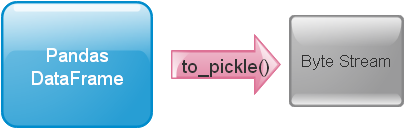 We can create a file with DataFrame data by using to_pickle(). We will create one DataFrame by using a dictionary.
What is pickle ?
Python Pandas DataFrame output as pickle & using Excel or MySQL table as source using to_pickle()
import pandas as pd
import pickle
my_dict={
	'NAME':['Ravi','Raju','Alex'],
	'ID':[1,2,3],'MATH':[30,40,50],
	'ENGLISH':[20,30,40]
	}
df = pd.DataFrame(data=my_dict)
df.to_pickle("my_data.pkl") # pickleddf.to_pickle("D:\my_data\my_data.pkl")Compression
We can add compression option. ( You must take care while reading the same file )df.to_pickle("my_data.pkl",compression='zip') protocol
We can assign the integer or we can get the latest by using HIGHEST_PROTOCOLdf.to_pickle("my_data.pkl",protocol=pickle.HIGHEST_PROTOCOL)Using SQLAlchemy
We will collect records from our sample student table in MySQL database and create the pickle file by using to_pickle().Collect SQL dump of sample student table below.
Read more on MySQL with SQLAlchemy connection. you can add path if you want the file to be created using to_pickle() ( sample is given above )
import pandas as pd
from sqlalchemy import create_engine
my_conn = create_engine("mysql+mysqldb://userid:pw@localhost/my_db")
sql="SELECT * FROM student LIMIT 0,10 "
df = pd.read_sql(sql,my_conn)
df.to_pickle("D:\my_data\my_data.pkl")
From Excel file to Pickle output
In above code we have created one DataFrame by taking data from a MySQL database table. We can create DataFrame by using any excel data or by using any csv file or from any other sources. ( check here to create a DataFrame from 8 different sources )Once a DataFrame is created, then using that we can create pickle output by using to_pickle(). Here is one example to read one Excel file to a DataFrame and generate the string, you can explore other sources to create a DataFrame and finally generate pickle / file.
We used read_excel() to read our sample student.xlsx file.
df=pd.read_excel("D:\\my_data\\student.xlsx") # Path of the file.
df.to_pickle("D:\my_data\my_data.pkl")df=pd.read_csv("D:\\my_data\\student.csv") # change the path
df.to_pickle("D:\my_data\my_data.pkl")While creating the pickle we have to note the compression used. When we de-serialize or un-pickle the same file, we must use the same type of compression.
read_pickle()
Read how to pickle data stored in a MySQL table.
Pandas read_clipboard() read_html() read_csv() read_excel() to_excel()
Data input and output from Pandas DataFrame

Subhendu Mohapatra
Author & Instructor at plus2net
I write and maintain practical tutorials on Python, PHP, SQL, JavaScript, HTML, jQuery, and web development at plus2net. The tutorials focus on clear explanations, working examples, and code that readers can test and adapt while learning.
Connect:


Subscribe to our YouTube Channel here
This article is written by plus2net.com team.
https://www.plus2net.com

 Python Video Tutorials